Student Work

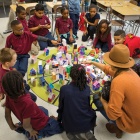
From first-year to comprehensive studio in architecture, to graduate-level thesis research, to studio-generated plans for community stakeholders, work by our students reflects our learn-by-doing and experimental approach to teaching and research in architecture, urban planning and real estate development. Scan our gallery of student work and their imaginings of space, place and community.

First published in 1990 as the School of Architecture and Planning's journal of student work, Intersight chronicles the creative and scholarly outputs of our students and reflects on the pedagogy of the school. 

  • Introducing Architectural Theory: Expanding the Disciplinary Debate
    11/20/23
    Building on the success of the first edition, an engaging and reader-friendly work on complex ideas, Introducing Architectural Theory: Expanding the Disciplinary Debate, broadens the range of themes, voices, and geographies represented to provide a more comprehensive and contemporary theory book.  
  • CRE Development Strategies and Practice
    2/7/23
    The School of Architecture and Planning’s Master of Real Estate Development program (MSRED) is one of only a few programs in the U.S. offering interdisciplinary studies of real estate development with architecture and urban planning. UB's MSRED program offers a course in commercial real estate (CRE) development strategies and practices as a capstone to the program. In the Fall 2021 capstone course, students pulled together knowledge that they learned throughout the three-semester program. The course enabled students to pursue their personal career interests by acting as an industry developer building their own CRE project
  • Piecemeal Urbanism
    2/7/23
    Piecemeal Urbanism looks to capture the dynamic and unpredictable life of buildings that traditional photos, drawings, and models cannot fully capture. Morgan Mansfield explored methods of visualizing transformation of architecture through the continual change of these buildings to ask how a representational toolkit can respond to architecture’s temporal nature.
  • Signs of Life
    2/7/23
    The Signs of Life Summer 2021 studio rekindled a relationship with Griffis Sculpture Park, a 425-acre park dedicated to experimentation and expression. The park was first established by Larry Griffis Jr., an artist set on creating a haven for art, imagination and play within the Allegheny Mountains. In addition to its continued role as a public sculpture park, it has served as a testing ground for a series of architecture design studios and a place for permanent installations by members of the University at Buffalo
  • Storefront Afterlife
    2/7/23
    Buffalo’s East Side has provided students with examples of successful revitalization projects for inspiration, such as the Broadway Market and the Buffalo Central Terminal. However, there are many other instances where storefront revitalization has not seen the same favorable outcome.
  • Caution Sails
    2/7/23
    Caution sails culminated from a Fall 2020 urban design studio, Building Brydges, where students were tasked with looking at the Niagara Falls Public Library and asked to take an in-depth look at the library’s history, architecture and its architect, Paul Rudolph
  • Gowanus: Our Space
    2/2/23
    The Fall 2021 graduate option studio was a collaborative studio ran by members of Dark Matter University (DMU), a democratic network guided by the principle that people cannot survive or thrive without immediate change toward an anti-racist model of design education and practice. 
  • On the Edge
    1/26/23
    The studio culture is meant to help students adjust to their new environment and new ways of thinking while supporting their growth through contact with graduate students and other faculty throughout their introductory semester.
  • Buffalo:A Green Archipelago?
    1/26/23
    In Spring 2021, students within the Master of Architecture program’s Urban Design studio worked with Master of Urban Planning (MUP) and dual-degree students in direct correspondence with People United for Sustainable Housing (PUSH), a Buffalo nonprofit organization. The students within this studio worked closely with PUSH to develop a neighborhood development plan as a response to their Green Development Zone (GDZ). 
  • New Middles
    1/26/23
    The Spring of 2021 fostered a foundation of support for the research and ecology of work done by Associate Professor Joyce Hwang. Hwang’s research and architecture to support middle species (mice, bats, raccoons, birds, etc.) Includes several installations across the country and in Buffalo, like the "Bat Cloud" in Buffalo’s Tifft Nature Preserve.
  • Covid-19 Evictions in the Rust Belt
    1/25/23
    This student report analyzed the effects of the          COVID-19 pandemic on the eviction rates of the Rust Belt Cities of Buffalo, Pittsburgh and Detroit. These cities were chosen by the studio specifically due to their existing conditions. Within these Rust Belt cities, there is heightened housing instability due to factors created by systemic racism. The report offers recommendations for programs and policies to prevent evictions and improve housing stability within these cities and others like them.
  • Invisible Cities
    1/25/23
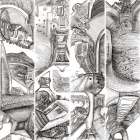
    The Architectural Sketching and Environments course presents students with a unique experience. Throughout the semester, the class examines modern perspectives on the physical environment, uncovering the relationship between natural and constructed. Using sketching as a medium to see, feel and think, students draw their surroundings, ranging in content and scale from human movement, to built structures, to natural spaces. Students focus on enhancing their ability to draw from imagination and establishing a conceptual perspective from the mind. Through drawing, students can find themselves participating in an act of discovery. It is important for designers to be able to perceive a written visual and translate it to paper. However, this process is different for everyone. Students worked on creating visuals in the form of a physical object set within a landscape at an unattainable distance, or through a visual dreamt up within their mind. Architectural sketching is a skillset aspiring architects and designers develop through time and practice. Invisible Cities, a series of illustrations by Samantha Fox, draws inspiration from Italo Calvino’s Invisible Cities – a book that describes Venice as a series of fantastical places. Calvino depicts cities of various terrains, scales and inhabitants. By reading excerpts from Invisible Cities, Fox created her own city, Arborea: a city perched in the trees, and a tight-knit community interconnected by bridges and zip lines. The city is lit by hanging lanterns, sparking it alive day and night. Building these cities through a mixed media of micron pen and copic marker allowed the city to come to life, and viewers to imagine themselves there.
  • African Canopy for Utica Station
    1/25/23
    The 2021 Inclusive Design graduate studio worked to create a proposal for a new installation at Utica Street Station in Buffalo. This project came about through efforts between the City of Buffalo, the Niagara Frontier Transit Authority (NFTA) and the School of Architecture and Planning to honor the late Robert Traynham Coles, a Black architect who designed the station along with many other buildings in Buffalo. 
  • Tandem Cloudgazing
    1/23/23
    In Spring 2021, freshmen architecture students explored combining material systems, simple building components and fundamental actions to create built prototypes that are, in an alchemical way, greater than the sum of their individual parts. 
  • Firing
    1/23/23
    Historically, fire is the process of combustion ignited through the chemical reaction of heat, oxygen and fuel. Students examined historical contexts of fire within the world as ritualistic events or elements of survival.
  • Structurosity
    1/19/23
    The School of Architecture and Planning offers a myriad of courses under the label of "Structures." Structures is a set of applied physics courses that have transitioned from the traditional lecture heavy, math-based learning to lab-based learning within the Fabrication Workshop, a 5,000-square-foot workspace equipped with tools and technology to help students broaden their fabrication skills. 
  • Microhome, Modular Home
    1/19/23
    For this Summer 2021 studio, students focused on the design of a micro home and modular home to be entered into two design competitions. The overarching theme across both home types was to introduce a design strategy in response to specific environmental contexts and target users. Students considered what it means to design for a specific group or communal need, or how various pro - grammatic spaces could function when overall building footprint and square footage requirements are limited.
  • Good Neighbors
    1/19/23
    We challenge the notion that entering the field at the graduate level is a disadvantage and work to ensure each student succeeds in the program.
  • Aberrant Ecologies
    1/17/23
    For the Spring 2021 Ecological Practices intellectual domain seminar, students explored and analyzed "undesired" natures within their city, identifying "aberrant ecologies." Students worked through methods of analog making to investigate these instances and rediscover them as opportunities for natural growth in the built environment. They paired photographs of their natural environment with their own artworks to prompt questions around how nature participates with the city in unexpected ways.
  • Convergent Histories
    1/17/23
    How do we preserve and interpret spaces where the material fabric has been destroyed, often by policies and programs that target marginalized communities?
  • Housing as Process
    1/13/23
    For the past few years, this studio proposed new high-density housing in New York City. This year, students shifted their view to Buffalo’s East Side and the Pratt Willert neighborhood. Students investigated how different methods of housing can create a response to city conditions.
  • Figure to Fiber
    12/9/22
    The Spring 2021 Situated Technologies research studio returned to the topics of geometry and topology through surface disclinations, introduced by Assistant Professor Nicholas Bruscia in 2019 as both a developing area of research and a pedagogical exercise.
  • Minus Minimums
    3/21/22
    Eliminating parking minimums can reduce unnecessary parking supply and encourage development constrained by excessive minimum requirements. Land use, location, and transportation demand initiatives affect the quantity of off-street parking supplied in response to market conditions. Our findings suggest mixed-use developers are likely to take advantage of the ability to provide less parking in highly accessible locations. Though many developers quickly pivot to the newfound possibilities of providing fewer parking spaces, others continue to meet earlier requirements. Cities of all types stand to benefit from undoing constraining parking policies of the past and allowing developers to transform parking lots to “higher uses.”
  • Rust Belt Cosmopolitanism: Resettlement Urbanism in Buffalo, New York
    12/20/21

    Buffalo at the Crossroads is a collection of essays where twelve authors highlight the outsized importance of Buffalo, New York, within the story of American urbanism. Özay’s contribution reflects on the urban impacts of refugee resettlement in Buffalo, situating in the historic context of immigration and pluralism fostered by the city.

  • Planning Corruption or Corrupting Planning?
    12/1/21
    Emmanuel Frimpong Boamah, assistant professor of urban and regional planning, and Wes Grooms, planning theorist, urban political economist and a visiting assistant professor of urban and regional planning, join forces with renowned authors  to better understand corruption and how it complicates planning. 
  • Climate Adaptation and Resilience Across Scale
    11/16/21

    This book highlights North American cases that deal with issues such as climate projections, public health, adaptive capacity of vulnerable populations, and design interventions for floodplains, making the content applicable to many locations around the world. The contributors in this book discuss topics ranging from how built environment professionals respond to a changing climate, to how the building stock may need to adapt to climate change, to how resilience is currently being addressed in the design, construction, and operations communities.

  • Evaluating users’ perceptions of a Main Street corridor: Before and after a Complete Street project
    10/1/21

    The evaluation of users’ perceptions of a Main Street corridor was carried out through a post occupancy evaluation (POE) methodology was used to evaluate a Complete Street (CS) project and the findings highlight the need for outreach and evidence-based CS implementation.

  • Barry Sampson Teaching + Practice
    9/14/21

    This book documents the ideas and work of notable Canadian architect Barry Sampson, who was Professor of Architecture at the University of Toronto for nearly thirty years, and an instrumental part of the evolution of Baird Sampson Neuert, a significant critical practice in Toronto that influenced the development of ideas in the city, throughout the region, and more widely.

  • Code as urban vision: A critique of the Buffalo Green Code
    9/1/21

    This paper provides a critical reflection on the Buffalo Green Code and the city’s efforts to elevate it as a comprehensive vision for the city. The paper pays particular attention to the affordable housing and vacant land challenges of the city, which remain unaddressed in the code, despite the claims of comprehensiveness.

  • Giga Shed Urbanism
    8/1/21

    Reid Hetzel (MArch '21) was recognized with the Design Excellence Award for his thesis, a reimagining of Buffalo's Tesla Gigafactory as civic space,

  • Rooting Resilience: Planning for the future of urban agriculture in Buffalo, New York
    8/1/21

    Lanika Sanders, a 2021 graduate of the Master of Urban Planning program, was recognized with the MUP Best Professional Project for her research on Buffalo’s urban agriculture landscape, synthesizing existing plans and policies to highlight opportunities for enhancement of Buffalo's agricultural capacity.

  • Race and Modern Architecture: A Critical History from the Enlightenment to the Present
    1/14/21

    This volume of essays offers a welcome and long-awaited intervention for the field by shining a spotlight on constructions of race and their impact on architecture and theory in Europe and North America and across various global contexts since the eighteenth century.

  • Good Neighbors Studio
    12/15/20
    The fifth edition of the studio will emphasize critical thinking on basic architectural issues through the design proposal of a group of three houses for three very different families that will be sharing a single undivided lot in the east side of the city of Buffalo, New York – the City of Good Neighbors.
  • Good Neighbors
    12/1/20
    The fifth edition of this studio, the introductory studio experience to the 3.-5-year Master of Architecture program, emphasizes critical thinking on basic architectural issues through design proposals for a group of three houses for three different families sharing a single undivided lot.
  • Efflorescence
    12/1/20
    The Fall 2020 semester for junior architecture studio focused on the Tectonics of Buoyancy and the Buffalo Niagara Region’s relationship and response to water’s edge. This design studio encourages students to re-examine the prevailing Western tendency to fortify ourselves against the elements for fear of catastrophic ecological, social, and cultural impacts. Throughout the semester, students explored the relationship between human settlement and water and how architects can offer new tectonic responses to these issues. 
  • Upstate Road Train
    12/1/20
    The Upstate Road Train (URT) proposed for New York State is a state-of-the-art concept for intercity transportation. The overarching idea for this report was provided by Tim Tielman, executive director of the Campaign for Greater Buffalo History, Architecture & Culture. This report analyzes existing infrastructure to recommend how this URT system can be integrated into its fabric.
  • Urban Life: Self + Society
    12/1/20
    In the Fall of 2020, students in the Senior class designed multiple-unit housing within the Bedford Stuyvesant district of Brooklyn, New York. The semester focused on the urban dwelling as a threshold between self and society, between local and global, and between nature and culture. This project aimed to develop connections in the student’s mind about context and developing systems of housing that would relate to a greater social, technical, cultural, political, and economic understanding of urban space.
  • Neighborhood Walk
    12/1/20
    This project invited urban planning students to plan and carry out a walk through a neighborhood of their choice. Their walking route needed to be safely navigable as a pedestrian and between .5 and 1 mile in length (around a half hour walk).
  • Methods in Preservation
    12/1/20
    This course introduces students to the basic guidelines, standards, research methods, and documentation techniques used in historic preservation to identify and record historic structures and sites. These kinds of research techniques explored by students included the development of site descriptions, creating historical narratives, reviewing existing scholarly and/or professional literature, collecting primary and secondary data, developing skills in architectural photography, and understanding the basics of documenting and analyzing historic material fabric. The course makes use of lectures, discussions, and fieldwork to introduce the various ways in which preservationists document historic sites and resources.
  • Villusion
    12/1/20
    This short film was created using the zoom interface by two students studying on different continents. Miguel Ortiz-Teed, working in Buffalo, and Yogesh Ravichandar, working in India, wanted to examine and express the specific difficulties of personal interaction in the video-conference environment.
  • People & Place
    12/1/20
    Willert Park Courts (WPC), known today as A.D. Price Homes, is currently a vacant residential housing complex made up of ten buildings located in the Ellicott District of the east side of Buffalo, New York.
  • Transformable Shells
    12/1/20
    In 2018, the School of Architecture and Planning hosted a competition to address a design problem: students sitting on the HVAC units in the newly renovated Hayes Hall. The competition embraced the issue by inviting students to offer a design solution that would allow students to use the systems in a safe manner.
  • Near-Term Strategies for the Northland Campus
    12/1/20
    For decades, the area around Northland Avenue suffered from divestment and abandonment, especially as many of its former manufacturing anchors succumbed to outside economic forces. Due to the adjacent Belt Line railroad, the corridor had become a strategic industrial hub able to move both people and products en masse. Once home to manufacturers such as Houdaille Industries, Otis Elevator Company, Curtiss-Wright Corporation, Northland Rubber Company, and Niagara Machine & Tool Works (later Clearing Niagara), the products that left the loading docks went on to forge modern America. A blue-collar workforce, building aircraft engines, plunger elevators, and automobile parts, established residency near their employers starting around the turn of the 20th Century. Over time, this pattern of settlement formed the Delavan Grider neighborhood we know today.
  • Urban Renewal and School Reform in Baltimore
    8/18/20

    Urban Renewal and School Reform in Baltimore examines the role of the contemporary public school as an instrument of urban design. Bridging facets of urban design, development, and education policy, this book contributes to an expanded agenda for understanding the spatial implications of school-led redevelopment and school reform.

  • The Fifth Ugliest College Campus in America
    8/1/20
    The campus story of the University at Buffalo is an alliterative tale of excessive optimism and investment, followed by passive indifference and resignation. The result: three campuses—each a stunted fragment of a vision left unfulfilled—the whole less than the sum of its parts. This seminar explored the trials and tribulations of university growth and campus planning at UB—acknowledging the university's checkered past as a means to project a more effective campus future.
  • Botanical Garden Master Plan
    8/1/20
    The North Tonawanda Botanical Gardens is an 11-acre site located on 1825 Sweeney Street in North Tonawanda, NY, bordering the Niagara River. The site is overseen by the North Tonawanda Botanical Gardens Organization (NTBGO), a nonprofit working towards restoring the garden to a scenic destination for community education and activity. Three members of the NTBGO, David Conti, Robbyn Drake and Laura Pecoraro, gave students the opportunity to design a proposal for the renovation and re-imagination of the North Tonawanda Botanical Gardens.
  • Off the Grid
    8/1/20
    During the Summer 2020 semester, Off the Grid, led by Professor Jon Spielman, was one of three remote programs being offered. This studio investigated new ways of exploring systems requiring energy established by the man-made grid system. 
  • The digital life of the #migrantcaravan: Contextualizing Twitter as a spatialtechnology
    7/10/20
    Emmanuel Frimpong Boamah, assistant professor of urban and regional planning, examines the relationship of spatial mapping and social media for migrant caravans in South America. 
  • Black Spaces Matter
    6/25/20

    As the nation roils over its glaring inequities in racial justice, UB assistant professor of architecture Charles Davis II explores the historic connections of race and place in this contribution to the architectural history journal Aggregate.

  • The Border and the Market
    6/11/20

    Samendy Brice (MArch '20) has been awarded the 2019-20 ARCC King Medal, the Deptartment of Architecture's Thesis Prize, for her proposal of a border market as a structural element and condition of exchange along the contested border between Haiti and the Dominican Republic.

  • Feasibility Assessment of an Innovation District in Buffalo
    5/20/20
    In the pursuit of creative and contemporary economic development strategies, a group of leaders in Western New York identified an innovation district (ID) as an important potential resource for our region. This term describes urban neighborhood-scale geographic places where a new economy combines high-tech businesses and institutions within a collaborative built environment that is conducive to living, working and playing. The original nomenclature was established by Julie Wagner and Bruce Katz as part of a series of Brookings Institute publications.
  • The Northeast Greenway Initiative
    5/20/20

    A graduate-level studio engaged the neighborhood surrounding UB's South Campus in exploring the possibilities for extending a critical rails-to-trails greenway. This one-mile trail, called the Northeast Greenway, would be a much needed link in Buffalo’s trail network connecting the existing North Buffalo and Tonawanda Rails to Trails to the East Side.  

  • Wanderland
    5/20/20
    This report was prepared by freshman and sophomore students from across UB in a seminar class taught by urban planning professor Ernest Sternberg. The purpose of the class was to involve students in the experience of conducting a real project for a real client. In this case, students worked with the Town of Amherst, represented by Town Supervisor Brian Kulpa and Margaret Winship, the town’s Director of Strategic Planning, to help envision a Central Park in relationship to a recently expanded and reorganized town park system. 
  • Post-industrial housing: An affordable housing opportunity for post-industrial cities
    5/20/20
    Cities grappling with limited supplies of high-quality, affordable homes are exploring alternatives in housing policy and form. This graduate-level studio in the Master of Urban Planning program explores the potential for manufactured housing in Buffalo and post-industrial cities more broadly.
  • Scajaquada Creek: The Existing Conditions & The Future
    5/20/20
    This graduate-level studio in the Master of Urban Planning program explores the Scajaquada Creek and its potential for development as a cultural and ecological asset for the City of Buffalo.
  • The Village of Kenmore: Planning & Design Recommendations
    5/20/20
    The 2020 Plan for the Village of Kenmore was developed in collaboration with municipal leaders and community members in the community located along the northern border of the City of Buffalo. The plan considers current issues being tackled in the village, the planning board’s goals for the future of Kenmore, as well as a broad idea about how village planning works in Kenmore.
  • Regional economic development & equity assessment for Buffalo, New York
    5/20/20
    A graduate-level studio directed by associate professor of urban planning Jiyoung Park, PhD, This study is focused on investigating economic development opportunities for four cities along the New York State I-90 corridor; Buffalo, Rochester, Syracuse, and Albany. 
  • Kaisertown Development Plan
    5/20/20
    The Kaisertown Neighborhood Development Plan aims to strengthen this Buffalo neighborhood's existing assets through a series of improvements. The studio findings aim to promote social participation, economic development, main commercial corridors, and urban environment as well as raise awareness of Kaisertown within the region and the context of the Buffalo.
  • Board and Batten: The legacy of Kirkbride and the therapeutic landscape
    5/20/20
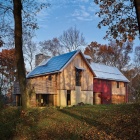
    Students in this graduate preservation planning studio, directed by clinical associate professor of planning Kerry Traynor, completed an adaptive reuse proposal for a 19th-century barn located on the historic Richardson Olmsted Campus in Buffalo.
  • Greater University District Plan
    5/20/20

    The Greater University District (G.U.D.) Plan provides a clear and cohesive vision to enhance the intersection of the Town of Amherst, the Town of Tonawanda, and the City of Buffalo. By building on existing initiatives and plans, the G.U.D. Plan aims to strengthen assets and transform this area into a healthy, vibrant, and welcoming community.

  • Solitude Pavilion
    5/1/20
    Solitude Pavilion is located on the University at Buffalo’s South Campus between Hayes Hall and the Hayes B Annex. The project aims to create a nesting environment by combining two contrasting systems using terracotta as the primary material. 
  • Architectural Sketching and the Built Environment
    5/1/20
    The sketches featured here were drawn after this course went completely remote. Before this transition class activities were dependent upon the freedom of movement and close inter-personal contact. Until this point the mode of interaction and learning was very direct and experiential.
  • Playing Against Type
    5/1/20
    The Spring 2020 Inclusive Design studio, Playing Against Type, was a critique on the typological thinking present in western architecture. Assistant Professor Charles Davis encouraged students to examine the reuse of European-inspired developer housing by the material customs of Black life on Buffalo’s East Side. It is understood within these investigations that the typological diagram of a building emulates the function of the cultural potentials of “primitive” peoples against the standards and norms of European civilization. 
  • Victorian Dreams
    5/1/20
    Encompassing the period from about 1840-1900, Victorian architecture is characterized by a wide range of interpretations and re-combinations of distinctly different historical traditions. The evolution of Victorian architecture was spurred by many factors including the desire of building owners to create associations with past cultures and times, the role of builders (carpenters, masons, cabinetmakers, etc.) as designers, and the newly emergent technological capacities of industrial mass production.  
  • Resilience Hub
    5/1/20
    During the Junior Spring semester an integrated design studio is carried out and aimed toward incorporating various systems into a larger building tectonic. In the Spring of 2020, students designed a laufmachine, a self-propelled, two-wheeled vehicle; it is the 19th century predecessor to the bicycle. This portion of the semester prompted students to begin thinking about a multitude of systems within their designs through this construction process. 
  • Architectural Alchemy
    5/1/20
    The spring semester of 2020 for freshman architecture explored form in relation to the scale of the human body. This was done through examinations of scaled materials and the ways in which people interact with and sensorially respond to space. Students were encouraged to consider all construction scales as possessing the power to develop critical and influential architecture for those who interact with them.
  • Restoring Scajaquada Creek
    5/1/20

    Architecture and urban planning students in a joint urban design studio explored redevelopment solutions for the Scajaquada Creek corridor and opportunities to integrate the natural and surrounding built contexts to boost public health. 

  • Domesticity and Mass Customization
    5/1/20
    The Situated Technologies studio of the Spring 2020 semester focused heavily on ideas of domesticity and “mass-customization” in their design investigations. Mass-customization is a term used to describe a change in business perception from a mass market to a mass-customized market. Products developed within a mass-customized market are often altered to fit an individual customer’s needs, leading to more effort placed into manufacturing and retail methods. 
  • Adaptive Architecture Study
    5/1/20
    This study is inspired by Lina Bo Bardi’s adaptive reuse project, SESC Pompeia Factory. The main factory building is comprised of a large open space ruled only by a rectilinear grid of columns. 
  • Trellis at Silo City
    5/1/20
    Willow Way aims to create a space for observing time and growth of both the site and structure by using architecture as the infrastructure for habitat and landscape.
  • Regional Economic Development & Equity
    5/1/20
    This study focused on investigating economic development opportunities for four cities along the New York State I-90 corridor: Buffalo, Rochester, Syracuse, and Albany. 
  • Anachronistic Spaces
    5/1/20
    Through the design of Anachronistic Spaces, this thesis speculates on futures in the Great Lakes Region through a stance on Architecture that advocates for sensitivity towards a world often ignored or neglected in sedentary frameworks. Research into Nomadism reveals that many nomadic communities have long been cognizant of the relationships between resources, consumption, and environment. As a counterpoint to modern sedentary living, nomadic communities are a case study on resiliency and adaptation in the face of increasingly extreme climactic, political, economic, and social conditions. 
  • Manufactured Housing
    5/1/20
    The affordability of housing has become a critical problem in most of the United States, especially in large, fast-growing cities where there are shortages of vacant land and housing. Post-industrial cities also face severe housing affordability problems due to population loss and deindustrialization, even though vacant land and abandoned houses are common. These “shrinking” or “legacy” cities face problems of low incomes, combined with surplus housing stock that has deteriorated to the point where it is no longer economical to rehabilitate it. The purpose of this report is to propose a unique opportunity for meeting the affordable housing needs of residents in post-industrial cities.
  • Fitting In
    5/1/20
    Students in the sophomore year in the Spring of 2020 made many explorations regarding site context. This approach was taken to help students understand how architecture achieves a sense of belonging in a given place, especially in an ever-evolving context.
  • Farming within a dual legal land system
    1/9/20
    Emmanuel Frimpong Boamah, assistant professor of urban and regional planning, and Samina Raja professor of urban and regional planning, join James Sumberg in examining how Ghana’s dual legal land system affects urban farmers
  • Building Character: The Racial Politics of Modern Architectural Style
    12/3/19
    Assistant professor of architecture Charles Davis II reveals the parallels between race and style in modern architecture.
  • Incubator
    12/1/19
    The Inclusive Design studio focused on developing a student oriented, small business incubator to foster creativity and entrepreneurism at UB. The designs were tailored to meet the needs of different “personas” for an imagined incubator design team through the use of inclusive strategies.
  • Sun_Food_Water design prototype
    10/29/19
    Affordability is defined based on monthly costs, with reductions for incorporating solar gain & PV-generated energy, water collection, and food production. 
  • Senior citizen cooperative housing Masten Park
    10/29/19
    These projects were part of a larger studio examining models for infill housing within two Buffalo neighborhoods, one of which was the Masten District.
  • Bailey Green Initiative
    10/29/19
    Bailey Green is an on-going community development initiative in the heart of Buffalo’s East Side that has its beginnings in a community partnership led by UB associate professor of urban design Hrioaki Hata.
  • Health hostel design prototype
    10/29/19
    Health Hostel provides temporary housing for those that may have just finished medical treatment of some sort or just need help navigating daily life activities.
  • Care house design prototype
    10/29/19
    The conceptual design developed by Alexa Russo, student, working with architecture professor Edward Steinfeld. The model was built in Spring 2018 by clinical assistant instructor Stephanie Cramer’s fourteen inclusive design students.
  • Housing Estates in the Baltic Countries
    9/17/19
    Professor of urban planning Daniel B. Hess and Tiit Tammaru of the University of Tartu, Estonia are editors of this book focusing on the formation and later socio-spatial trajectories of large housing estates in the Baltic countries—Estonia, Latvia, and Lithuania.
  • Exclusivity in the street railway era
    9/17/19
    Professor of urban planning Daniel B. Hess and Evan Iacobucci examine the role of historic entry gateways to American streetcar suburbs as markers of exclusivity. 
  • Making Bibelot: Casting material research within cultural frameworks
    9/4/19

    Bibelot gives a detailed account of the entire process and the working assumptions behind a terra cotta installation built by the authors, which explores untapped potential material to expand design and manufacturing possibilities. The project also demonstrates how bridges could be built between practice and material research without sacrificing the cultural significance of architectural artifacts.

  • Serendipitous conservation
    8/30/19
    Assistant professor of urban planning Ashima Krishna and Masters of Urban Planning graduate Enjoli Hall examine the conversion of former churches on the East Side of Buffalo as they are transformed into spaces for other faiths.
  • Buffalo Turning the Corner
    6/26/19
    Professors of urban planning Henry Louis Taylor, Jr. and Robert Silverman join associate professor of urban planning Li Yin collaborated on the Buffalo Turning The Corner Initiative through the Urban Institute’s National Neighborhood Indicators Partnership University at Buffalo Center for Urban Studies.
  • Aldo
    6/13/19
    Based on observations that spaces of play are rare moments where people from different economic, political and racial backgrounds share experiences, and influenced by the opportunistic infill-urbanism of Aldo van Eyck in post WWII Amsterdam, we propose a network of social infrastructures for playful encounters in the public realm.
  • Hidden in plain sight
    5/30/19
    Hidden in Plain Sight is Joyce Hwang and Nerea Feliz's proposal for a series of urban furnishings that aim to amplify and bring awareness to various forms of urban “life” through visual, tactile and ecological means. The project is designed to support an inclusive web of interdependent species, both human and non-human.
  • Smart Mobility
    5/20/19
    The following report on the applicability of various smart mobilities for the Buffalo-Niagara region is a synthesis of the full findings produced by the spring 2019 Masters of Urban Planning Studio Practicum led by Professor Bumjoon Kang, PhD in collaboration with the Greater Buffalo-Niagara Regional Transportation Council (GBNRTC). The emerging technologies that are quickly transforming the transportation systems of cities worldwide are considered in this report in an effort to present local transportation planning professionals with a framework for implementing these technologies in the Buffalo-Niagara region. 
  • Resilience Hub
    5/1/19
    The junior studio followed the laufmaschine project (see page 128) by designing a Bicycle Institute / Resilience Hub / Community Center in Cleveland, Ohio. The site sits directly adjacent to the Superior Viaduct and the Lake Link bike trail. 
  • Snap Interlock Module System
    3/20/19
    Snap Interlock Module System (SIMS), developed by UB associate professor of architecture Jin Young Song, imagines a new system for building with steel in the 21st century construction industry. The prototype is the winner of the 2019 Forge Prize.
  • Terra cotta grotto
    3/20/19
    “Terra-Cotta Grotto” is a design intervention constructed with standard terracotta extrusions that explores the spatial, material, structural and ecological conditions of a grotto.
  • Boundary Sequence Illusion - Ian MacDonald Architect
    3/4/19
    Edited by professor of architecture Brian Carter, This book considers the contemporary house through close scrutiny of works designed by Ian MacDonald, and the ideas that are embedded within them. 
  • Ground-level Agricultural Survey System (GLASS)
    3/4/19

    So Ra Baek Martha Bohm join UB mathematics associate professor John Ringland in developing tools to characterize food cultivation practices along roadside transects as a potential complement to traditional remote sensing approaches.

  • Urban agriculture in and on buildings in North America
    3/4/19
    Assistant professor of architecture Martha Bohm studies potential benefits of Urban Agriculture (UB), specifically food production in cities for residents lacking good access to fresh, healthy foods. 
  • Repealing minimum parking requirements in Buffalo
    3/4/19
    Professor of urban planning Daniel B. Hess investigates the repealing of parking minimum requirements in Buffalo.
  • Decrypting fare-free public transport in Tallinn, Estonia
    3/4/19
    Professor of urban planning Daniel B. Hess describes a fare-free public transport program in Tallinn, Estonia.
  • Transport in Mikrorayons
    3/4/19
    Professor of urban planning Daniel B. Hess examines, twenty-five years after the disintegration of the Union of Soviet Socialist Republics (USSR), the vision and implementation of transport planning in these modernist residential districts.
  • Build as you earn and learn
    3/4/19
    Emmanuel Frimpong Boamah, assistant professor of urban and regional planning, and Clifford Amoako explore informal housing dynamics in Kumasi, Ghana.
  • Differences in behavior, time, location, and built environment between objectively measured utilitarian and recreational walking
    3/4/19
    Bumjoon Kang, assistant professor of urban and regional planning, and collaborators work to to provide operational definitions of utilitarian and recreational walking and to objectively measure their behavioral, spatial, and temporal differences in order to inform transportation and public health policies and interventions.
  • Uganda Refugee Settlements
    1/28/19

    Kory Smith, Lisa Vahapoğlu and collaborators from UB work to plan for sustainable communities for refugees in Uganda.

  • Rehabilitation Engineering Research Center on Accessible Public Transportation Grant
    1/28/19
    The Rehabilitation Engineering Research Center on Accessible Public Transportation (RERC-APT) researches and develops methods to empower consumers, manufacturers, and service providers in the design and evaluation of accessible transportation equipment, information services, and physical environments.
  • Growing Food Connections
    1/28/19
    Professor of urban planning Samina Raja is the principal investigator for this five-year comprehensive research, education, and extension initiative aimed at strengthening local and regional food systems in the United States by building local governments' capacity to reconnect farmers with under-served consumers.
  • Acculturating into (In)active Commuting to School
    1/28/19
    So-Ra Baek, Samina Raja and collaborators how the cultural backgrounds of caregivers influence their perceptions and attitudes toward their children's active commuting to school.
  • Adapting Buildings for a Changing Climate
    1/28/19
    In collaboration with the New York State Energy Research and Development Authority (NYSERDA), this series of reports lead by Nicholas Rajkovich help New York’s policymakers, architects, builders, building owners and managers, and residents understand the impacts climate change has on the State’s building sector. 
  • Beyond urban–rural dichotomies
    1/28/19
    Assistant professor of urban planning Zoé Hamstead and collaborators use the Technomass indicator to depict urbanization as a continuous variable.
  • Smart & Connected Management of Thermal Extremes
    1/28/19

    The Community Resilience Lab led by Zoé Hamstead and Nicholas Rajkovich, along with collaborators from ASU and Temple University, examine different ways in which extreme heat and cold impact U.S. cities.

  • Planning and pandemics: COVID-19 illuminates why urban planners should have listened to food advocates all along
    1/1/19
    Samina Raja, UB professor of urban planning and director of the Food Systems Planning and Healthy Communities Lab, reveals that the current food system crisis was in the making long before COVID arrived, and highlights how community-led efforts in Buffalo are responding to the current crisis.
  • Identifying street design elements associated with vehicle-to-pedestrian collision reduction at intersections in New York City.
    1/1/19
    Bumjoon Kang, assistant professor of urban and regional planning, evaluates associations between the installation of eleven street design elements, between 2007 and 2015, and subsequent changes in vehicle-to-pedestrian collisions in New York City
  • Landscape-Based Extreme Heat Vulnerability Assessment
    1/1/19
    Assistant professor of urban planning Zoé Hamstead and collaborators use mapping to predict the effects of extreme heat in New York City.
  • Walking School Bus Program Feasibility in a Suburban Setting
    12/19/18
    Bumjoon Kang, assistant professor of urban and regional planning, and Chunyuan Diao investigate the feasibility of suburban walking school bus programs by studying conditions at Sweet Home Central School District in Western New York.
  • Journal of Urban Affairs: Special Issue on Promoting Social Justice and Equity in Shrinking Cities
    12/19/18
    Professor Robert Silverman guest edited this special issue of the Journal of Urban Affairs (JUA) which reframes the discussion of shrinking cities, placing an emphasis on the analysis of policies to promote social justice and equity.
  • Unoriginal Things
    12/1/18
    An investigation of the Broadway-Fillmore district, Foederer’s project for Unoriginal Things began with a simple observation. What was once a thriving working-class neighborhood with a dense housing fabric, had become irreparably changed through a sustained effort by the City of Buffalo to purchase derelict homes and subsequently demolish them.
  • Pride Center
    12/1/18
    Environmental Design students worked with the Pride Center of Western and New York to assist in expanding its services, and reach to make the Western New York region an inclusive, safe and healthy community for lesbian, gay, bisexual, transgender, and queer (LGBTQ) individuals.
  • City/Life
    12/1/18
    The City/Life studio puts a focus on the urban dwelling as a threshold between self and society, between the local and the goal, and between nature and culture.
  • Seneca Bluffs Public Pool
    12/1/18
    Brianna Mancini’s proposal for a community pool is rooted in process. An intensive analysis of precedents generated concepts, which were then collaged together to generate a synthesis drawing. This new geometry formed the basis and inspiration for both the conceptual and formal paradigms of the proposal.
  • Casa Santa Oranna
    12/1/18

    Air as both a subtle omnipresence and definitive energy, “CatenAIRies” pays homage to it by utilizing wind to create a fluid and ethereal spatial experience

  • Weak House
    12/1/18

    Air as both a subtle omnipresence and definitive energy, “CatenAIRies” pays homage to it by utilizing wind to create a fluid and ethereal spatial experience

  • Wetland
    12/1/18

    The project is located near Hong Kong and will operate as a private event space/museum. The design aims to merge both land, water, and building in order to create a dialogue with nature. It is currently ongoing.

  • The Revolution Will Be Shared: Rebuilding the Urban Commons
    12/1/18

    Air as both a subtle omnipresence and definitive energy, “CatenAIRies” pays homage to it by utilizing wind to create a fluid and ethereal spatial experience

  • meadow BRIDGE woods
    12/1/18

    Air as both a subtle omnipresence and definitive energy, “CatenAIRies” pays homage to it by utilizing wind to create a fluid and ethereal spatial experience

  • Ave Maria University, Ave Maria Oratory
    12/1/18

    Air as both a subtle omnipresence and definitive energy, “CatenAIRies” pays homage to it by utilizing wind to create a fluid and ethereal spatial experience

  • Cryptomorph_F V-1/2/3
    12/1/18
    Cryptomorph_F V-1/2/3 consists of variants in a parametrically designed family of tectonic objects. These volumetric surfaces and their fused arrays of hexagonal involutions become prototypes that can be developed into entities that sense through filaments, influence airflow/atmosphere through form and topology, and invite multispecies inhabitation into their thick, articulated envelopes. Cryptomorphs are dense, compacted objects of ecological infrastructure that spawn expansive, tectonic landscapes of logistics that may be populated by flora, fauna and electronic forms of synthetic life.
  • Belmont Middle and High School
    12/1/18

    Air as both a subtle omnipresence and definitive energy, “CatenAIRies” pays homage to it by utilizing wind to create a fluid and ethereal spatial experience

  • Project 2XmT
    12/1/18

    Air as both a subtle omnipresence and definitive energy, “CatenAIRies” pays homage to it by utilizing wind to create a fluid and ethereal spatial experience

  • Iron Grey Lake House
    12/1/18

    Air as both a subtle omnipresence and definitive energy, “CatenAIRies” pays homage to it by utilizing wind to create a fluid and ethereal spatial experience

  • Understanding Paul Rudolph
    12/1/18

    Air as both a subtle omnipresence and definitive energy, “CatenAIRies” pays homage to it by utilizing wind to create a fluid and ethereal spatial experience

  • Various
    12/1/18
    A composite of various projects by Ryan Glick, consisting of buildings, competitions, thesis, academic and experimental projects that aim to test a wide range of typologies, concepts and skillsets. The diversity in project typologies, scales and complexities allows for investigations into various design ideas, many dating back to the foundational skills acquired during his tenure at the University at Buffalo.
  • The Vessel at Hudson Yards
    12/1/18

    On a crisp fall afternoon in New York City, one of the last 'Dogbones' is gently maneuvered via a tower crane. Iron workers are ready nearby to guide the piece into the final position and lock it into place using bolts. November 2017.

  • Lucas Strittmatter AMC En Route Feasibility Study
    12/1/18
    Lucas has nine years of experience in land use planning, sustainable development, and urban design from both the public and private sectors. He leads master planning efforts with an eye towards military facilities planning and federal sites and has completed plans in 10 countries and 20 states and territories. Lucas received his MUP degree from UB in 2013. He is a member of the American Institute of Certified Planners (AICP) and holds the designation of LEED Green Associate. Outside of work, Lucas devotes his time to exploring cities and enjoying nature with his wife, Neeti, and son, Nicholas.
  • CantenAIRies
    12/1/18

    Air as both a subtle omnipresence and definitive energy, “CatenAIRies” pays homage to it by utilizing wind to create a fluid and ethereal spatial experience

  • New York Changing, Revisiting Berenice Abbott's New York
    12/1/18

    New York Changingrevisits the sites of 100 photographs taken by Bernice Abbott, who in 1935 set out to document New York’s transformation from a nineteenth-century city to a modern metropolis. Douglas Levere meticulously duplicates her compositions with exacting detail; each shot is taken at the same time of day, at the same time of year, and with the same type of camera.

  • BLDG BLKS
    12/1/18

    Air as both a subtle omnipresence and definitive energy, “CatenAIRies” pays homage to it by utilizing wind to create a fluid and ethereal spatial experience

  • Into the Void
    12/1/18

    Air as both a subtle omnipresence and definitive energy, “CatenAIRies” pays homage to it by utilizing wind to create a fluid and ethereal spatial experience

  • A Wedding on the Kansas Landscape
    12/1/18

    On an open field of brome grass adjacent to the childhood home of the bride we constructed this temporary chapel and reception hall (not pictured). The secular ceremony united the couple in the grace of nature.

  • Philadelphia Integrated Planning and Zoning Process
    12/1/18
    The Philadelphia Integrated Planning and Zoning Process began in 2010 as a multiyear effort to update and modernize the city’s comprehensive plan and zoning code. It consisted of three interrelated components: 1) to prepare the Philadelphia2035 Comprehensive Plan, consisting of a Citywide Vision and 18 individual District Plans; 2) to rewrite the Philadelphia Zoning Code and remap the city based on adopted District Plans, and; 3) to create a Citizens’ Planning Institute for educating residents about planning principles and issues, and to serve as the agency’s civic engagement arm.
  • Al Shaheed Park, The Habitat Museum
    12/1/18

    The Habitat Museum displays the richness and diversity of the natural habitats of Kuwait through a large number of interactive programs and scenographic recreations.

  • Night and Day—Berlin and New York Projects, Objects and Subjects
    12/1/18

    Air as both a subtle omnipresence and definitive energy, “CatenAIRies” pays homage to it by utilizing wind to create a fluid and ethereal spatial experience

  • Castel Sant' Angelo, pen on Bristol
    12/1/18
    Castel Sant’Angelo presents itself as a centric building, yet provides a labyrinth of ramps, stairs and courtyards that do not allow the center to be perceived. As the visitor is immersed inside, narrow winding spaces deny outward views and courtyards slowly reveal the surrounding city of Rome. It is a constant switch between self-awareness and confusion with certainty that one must travel upwards to reach the highest point and claim the best views. The on-site drawing tracks a single path from the lowest point to the highest occupiable courtyard, experienced as a continuous panoramic view. 
  • Cricket Shelter and Farm
    12/1/18

    Our project aims to maximize access to nutrient resources and to deal with and support local communities in anticipation of post-disaster scenarios

  • Shiyala Primary School
    12/1/18
    Just 10 years after they were originally built, the modest classroom blocks that made up the Shiyala Primary School in Zambia, stood derelict. Despite the village’s local workforce, skilled in both earth-brick production and masonry work, both structures suffered from under-engineering, poor maintenance and lack of financial support. With a minimal budget, the existing structures are converted into a colorful primary school using inventive construction techniques that make the most of locally sourced and lowcarbon materials.
  • Right of Blood, Left of the Earth
    12/1/18

    Air as both a subtle omnipresence and definitive energy, “CatenAIRies” pays homage to it by utilizing wind to create a fluid and ethereal spatial experience

  • Explorations in color, material, and patterning
    12/1/18
    These projects explore color, material and patterning. They are commissioned art installations for events and galleries. The projects are designed digitally using Rhino 3D and Grasshopper software, then fabricated by hand. The materials explore both soft and hard materials, focusing on lightness and temporality. Many are common off-theshelf materials. The bright colors work together to shift and change based on views and perspectives in each project, hoping to engage viewers to move around and interact with the installations. Finally, patterns are explored by repeating forms and shapes across the designs. The aggregation of many small parts is often inspired by patterns found in nature.
  • Empty Sky: New Jersey's September 11th Memorial
    12/1/18

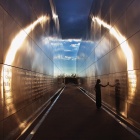
    The Empty Sky Memorial commemorates the 749 people from the State of New Jersey who were killed during the September 11th attacks. Twin walls transect a gently sloped mound anchored by a granite path that is directed toward Ground Zero.

  • A Chair, Suspended
    12/1/18

    Air as both a subtle omnipresence and definitive energy, “CatenAIRies” pays homage to it by utilizing wind to create a fluid and ethereal spatial experience

  • Rewrite the Past to Project the Future
    12/1/18

    Air as both a subtle omnipresence and definitive energy, “CatenAIRies” pays homage to it by utilizing wind to create a fluid and ethereal spatial experience

  • Smithsonian Institution Charles McC. Mathias Environmental Research Laboratory
    12/1/18

    The Charles McC. Mathias Laboratory, completed in 2015, is the Smithsonian Environmental Research Center's (SERC) principal environmental and research facility. Situatedon a 2,650-acre campus, SERC employs 180 scientists primarily focused on coastal ecology studying man's impacts on the fragile land-sea interface. The lab was designed accordingly as a "living laboratory" as an integrated, living part of the environment,not a structure sitting upon it.

  • The Restoration of Grand Central Terminal
    12/1/18

    Considered the Holy Grail of the preservation movement, the centerpiece of the Grand Central Restoration was the year-long restoration of the vaulted sky-ceiling, shown in this image of the Main Concourse with Sky Ceiling.

  • UnMade in China
    12/1/18

    Air as both a subtle omnipresence and definitive energy, “CatenAIRies” pays homage to it by utilizing wind to create a fluid and ethereal spatial experience

  • Brendan Rose (BPS '00)
    12/1/18
    The Lipe Cross-Arc is a landscape structure designed to provide cross-fit exercise amenities at LipeArt Park without detracting from the artistic mission of the park. The installation structurally resonates with the post-industrial cityscape of Syracuse's westside and incorporates elements for the following exercises: pull-ups, medicine ball toss, monkey bars, jump-ups, and rings. Brendan Rose led the project design, fabrication, and site installation.
  • Palazzo Lombardia
    12/1/18
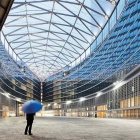
    A tower, weaving strands of linear mid-rise office space, and interconnected public spaces comprise this highly sustainable headquarters complex in Milan, named Best Tall Building Europe by the Council on Tall Buildings and Urban Habitat. The complex provides office and support spaces for the Lombardy government, with outdoor gathering places intended to enhance public life and stimulate regeneration of the district. In scale and materiality, the podium relates to the surrounding neighborhood, while the 160-meter-tall tower addresses nearby Pirelli Tower, the government’s former headquarters.
  • Eureka
    12/1/18
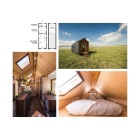
    The image contains photographs of small houses with big spaces in Eureka, Montana. Houses include: Covered Bridge House, Starliner House, Sapphire House, Terra Cabin, Sunstone Cabin, Sagebrush House.
  • Re-Envisioning the Elevated: Four Stations on the Astoria Line
    12/1/18
    Above-ground stations, once the crossroads of neighborhood activity, were walled off from the communities below, beginning in the 1980s. The “Re-Envisioning the Elevated: Four Stations on the Astoria Line” project aimed to return this connection back to the community. Public spaces are now connected visually through elegant, yet simple designs that open each stations’ mezzanine and platform. Organizational strategies consolidate years of accumulated conduit clutter. Art panels serve as exterior walls, elevating public art to the scale of infrastructure and connecting community to transit.
  • Shoreline: Remembering a Waterfront Vision
    12/1/18
    This project is funded by the New York State Council on the Arts with the support of former Gov. Andrew M. Cuomo and the New York State Legislature, and the Graham Foundation for Advanced Studies in the Fine Arts. “Shoreline: Remembering a Waterfront Vision” looks into looks into the history of Buffalo’s Shoreline Apartments, a housing complex designed by architect Paul Rudolph. The project opened with an exhibition of drawings, photographs, documents and artworks, spanning from the original vision of the Buffalo Waterfront Development in the 1960s to the eventual destruction of Shoreline in recent years. The exhibition was on view at El Museo from October 4 to November 16, 2019.
  • A collage of projects by S+ ARCHITECTURE
    12/1/18

    Air as both a subtle omnipresence and definitive energy, “CatenAIRies” pays homage to it by utilizing wind to create a fluid and ethereal spatial experience

  • All Hands And Hearts
    12/1/18

    Air as both a subtle omnipresence and definitive energy, “CatenAIRies” pays homage to it by utilizing wind to create a fluid and ethereal spatial experience

  • Lafayette 148 Shantou, China
    12/1/18

    Air as both a subtle omnipresence and definitive energy, “CatenAIRies” pays homage to it by utilizing wind to create a fluid and ethereal spatial experience

  • Procedural Tectonics
    12/1/18
    Like gravity of matter itself, the tools we use have deeply formative effects on the things we make. Because these tools are almost always inherited, we tend to see the choices we make with them, rather than the choice to use them at all, as critical. And yet, using 3D modeling software is far from a neutral act. Digital tools come freighted with the poetics and problematics of our contemporary, statistically-driven moment. They hold within the logical structure of their procedure a deep truth of our epoch; everything is possible at once and it is our choices, not material limits, that are operative. This project explores a language of architectural expression predicated on the processes of digital modeling. It seeks to express the cultural and conceptual value of the digital tools we use to design.
  • Architecture + Education
    12/1/18

    Air as both a subtle omnipresence and definitive energy, “CatenAIRies” pays homage to it by utilizing wind to create a fluid and ethereal spatial experience

  • Bit By Bit
    12/1/18

    Abstract and abstraction are two very different things. Both have a place in art and a significant impact on history. Abstraction has always been where you replace legible features with illegible features. This thesis does the opposite, by replacing legibility with specificity, making an oxymoron of sorts. By taking something as simple as an 8Bit arcade game character such as Megaman or Pacman, and turning its microsize and simplicity into something much more complex, something new here happens, a new representation is born.

  • Capricorn 2050
    12/1/18

    Project Capricorn was a planning and design project designed to provide a homeostatic living/working environment for 250,000 people in the Australian desert.

  • Fictive Kin
    12/1/18

    Air as both a subtle omnipresence and definitive energy, “CatenAIRies” pays homage to it by utilizing wind to create a fluid and ethereal spatial experience

  • The Farallon: A Tiny House Prototype on 26’ x 8.5’ Trailer
    12/1/18

    Air as both a subtle omnipresence and definitive energy, “CatenAIRies” pays homage to it by utilizing wind to create a fluid and ethereal spatial experience

  • Two Pink Shells
    12/1/18

    Air as both a subtle omnipresence and definitive energy, “CatenAIRies” pays homage to it by utilizing wind to create a fluid and ethereal spatial experience

  • Roots
    12/1/18
    The proposal, Roots, is a scheme to create a green gateway for the future Obama Presidential Library in Chicago, while also giving back to the surrounding Woodlawn Community.
  • Tectonics of Buoyancy
    12/1/18
    The relationship between the water and the city, between water and people, and between water and architecture, is a critically important issue. In the BuffaloNiagara Region, it is now understood that the typical strategy of fortifying against the elements and creating barricades along the water has had catastrophic ecological, social, and cultural impacts. The junior’s semester-long investigation explored and reflected on the role of water in human settlement and new tectonic possibilities for living in and along the water’s edge.
  • Strange Towns
    12/1/18
    On May 27, 1962, the coal seam that runs through the town of Centralia, Pennsylvania, was ignited by the deliberate burning of trash at the Centralia landfill, located in the pit of a former strip mine. After two decades of unsuccessful attempts to put out the fire and remediate the site, the town was abandoned—bought out by the federal government, and its buildings subsequently demolished— leaving behind traces of an eroding street grid and an ever-dwindling number of residents that refused relocation. The fire— 1,000 degrees Fahrenheit at its core and advancing at a rate of 50-75 feet per year— still burns today and could continue to do so for another 250 years.
  • Sustainable Futures
    12/1/18
    Sustainable Futures is a summer semester abroad that offers students the opportunity to live and work in the rural but rapidly developing region of Monteverde, Costa Rica. This interdisciplinary service learning program brings undergraduate and graduate students from Architecture, Environmental Design, and Landscape Architecture into interdisciplinary teams to work on community-identified public projects. 
  • UB Cultural Campus in Madrid
    12/1/18
    The study abroad program in Spain had students design a UB Cultural Campus in Madrid. Due to the site’s position on the threshold of the urban fabric and the natural landscape of the university district, students had to navigate and understand the social, cultural, and built context of the city. 
  • Innovation District
    12/1/18
    The relationship between the water and the city, between water and people, and between water and architecture, is a critically important issue. In the BuffaloNiagara Region, it is now understood that the typical strategy of fortifying against the elements and creating barricades along the water has had catastrophic ecological, social, and cultural impacts. The junior’s semester-long investigation explored and reflected on the role of water in human settlement and new tectonic possibilities for living in and along the water’s edge.
  • A Home for C.R.A.P.
    12/1/18
    Through a series of introspective design exercises, students generated new designs by exploring the fragments of their architectural past that are omitted from the history they typically highlight in a polished portfolio of their best finished work. This studio was an opportunity for students to reflect on their architectural life thus far by unearthing and resuscitating forgotten, dismissed, or repressed experiences.
  • Basketball Hall of Fame
    12/1/18
    At the heart of the project is the Center Court Atrium, organized around a basketball court that will serve as a forum for clinics and special events. Visitors glimpse the atrium while ascending in glass elevators. The Honors Ring, the first museum experience in this procession, is suspended within the spherical volume. Surrounding second-floor galleries frame multiple views into the spherical atrium and Center Court.
  • Seeds Cottage
    12/1/18
    Seeds Cottage is an exercise in joining a love of detail with a broader connection to nature. Designed in collaboration with an industrial designer and an artist, the Cottage seamlessly connects its inhabitants with surrounding landscape and the distant views of the Pacific Ocean and San Francisco Bay. Inspired by Eichler, the cottage’s steel structural elements and thermally broken steel framed windows open the house outward; interior walls clad with reclaimed old growth redwood create a warm and embracing environment. Board-formed colored concrete anchors the Cottage to its site.
  • No. 2
    12/1/18
    No. 2 (Number 2) is a series of model studies of objects to induce comfort of homeless individuals on the streets. The project used HDPE plastic bags, with the title based on the RIC (Resin Identification Code) of the material and, at the same time, the essence of recycling.
  • A millimeter of space
    12/1/18
    The interface between the natural and human-made at a material surface suggests the formation of an ongoing process, in which the relationship between materials and the environment is displayed
  • Big to Small
    12/1/18
    A multi-faceted study of the telescope houses of the Broadway-Fillmore neighborhood, Big to Small is a collection of work from 13 graduate architecture students.
  • Amazing Grace
    12/1/18
    Natalie Harack’s Amazing Grace is an instrument, created by modifying a traditional shopping cart, that collects environmental data and physical artifacts. The objective of this project was to build an instrument to probe the site through inquiry, insight, and impression to develop a representation of environmental phenomena.
  • Pluvius
    12/1/18
    Imagined by the Situated Technologies Graduate Research Group, the installation utilizes sensing technologies to integrate sound, light, and motion, and acts as a means to investigate questions of spatial contingency and the limits of predictability through an interactive, multi-sensory experience.
  • Are We There Yet?
    12/1/18
    This study examines patterns of growth and development on Niagara Falls Boulevard. Surveying major portions of the Boulevard and documenting trends, students engaged with maps, city directories, and other sources to locate areas with extant structures and analyze precedents that dealt with similar circumstances.
  • Poetry Square
    12/1/18
    Leticia Avila developed Poetry Square as a theoretical addition to the University at Buffalo’s library system on the South Campus. By both positioning it in front Abbott Hall and elevating the main floor, the project preserves the integrity of the campus’ main axis. The building would house a special poetry collection and act as a nest, shelter, library, and museum.
  • Stasis
    12/1/18
    This vessel became a design muse and instrument for the studio, investigating many fundamental questions that pertain to the tectonics of architecture—space and geometry, structure and skin, form and function, as well as material and construction.
  • Age-Focused Design - A Pedagogical Approach Integrating Empathy and Embodiment.
    11/11/18
    Julia Jamrozik, assistant professor of architecture, and Sarah Gunawan discuss an innovative approach to age-foccused design.
  • Geolocated social media as a rapid indicator of park visitation and equitable park access
    11/1/18
    Assistant professor of urban planning Zoé Hamstead and collaborators analyze geographic human visitation dynamics in all New York City parks using Twitter and Flickr data.
  • Venice through the eyes of Buffalo: An exhibition
    10/24/18

    Presenting artifacts, images and findings from students' weeklong exploration of the urban fabric of Venice, the exhibition reveals the effects of tourism on the historic, cultural and physical landscapes of a city.

  • Interpreting Kigali, Rwanda
    10/15/18
    Korydon Smith, Tomà Berlanda and colleagues explore the pressing challenges and opportunities to be found in planning, designing, and constructing a healthy, equitable, and sustainable city. 
  • Constitutional economics of Ghana’s decentralization
    10/1/18
    Emmanuel Frimpong Boamah, assistant professor of urban and regional planning, examines the rules that are often chosen to frame decentralization in Ghana.
  • The Impact of Single-Family Rental REITs on Regional Housing Markets
    9/5/18
    Urban planning professor Robert Silverman, PhD student Chihuangji Wang and collaborators examine the socio–spatial distribution of properties in single family home (SFR) real estate investment trusts (REIT) portfolios to determine if SFR REIT properties tend to cluster in distinct areas.
  • UB Cultural Campus - Madrid
    8/1/18
    Frank Kraemer and Jelani Lowe drew from their experiences while studying abroad in Madrid, Spain. They were immediately drawn to the physical barriers that separate the public and private domains in Madrid. They investigated this duality by layering transparent planes, exploring how to use transparency as a link between public and private aspects of program, while simultaneously providing necessary privacy.
  • Energy technology and lifestyle
    8/1/18
    Associate professor of architecture Martha Bohm reports the design process and measured performance of the University at Buffalo's net-zero energy prototype, the GRoW Home.
  • Investing in Urban Infrastructure
    7/27/18
    Dean Robert Shibley, and fellow 2017 Rudy Bruner Award (RBA) medalists provide powerful examples of how local leadership and investment in urban infrastructure can build and strengthen communities, catalyze economic development, and inspire civic pride in cities across America.
  • Snapping Light Surface
    7/26/18
    Jin Young Song's “Snapping Light Surface" tied for third place in the LG OLED Light Design Award in the space design category—which judges designs based on their incorporation of “life,” the LG “Human-Centric Care and Empathy” philosophy, flexibility, and creativity.
  • Snapping Facade
    7/24/18
    Jin Young Song's award winning concept seeks to bridge the gap between traditional, uninspiring building envelops and energy-hungry dynamic shading designs.
  • Unduk-Naru Ferry Terminal
    7/17/18
    This ferry terminal concept by Jin Young Song focuses on fundamentally dynamic human qualities such as waiting, meeting, playing, and departing.
  • Flutter Fin
    7/16/18
    Jin Young Song's louvered facade design prototype harnesses electrical energy from vibrating motion from the building envelope. 
  • Using social media to understand drivers of urban park visitation in the Twin Cities, MN
    7/1/18
    Assistant professor of urban planning Zoé Hamstead and collaborators use social media data to measure patterns of urban park visitation and assess factors influencing use.